
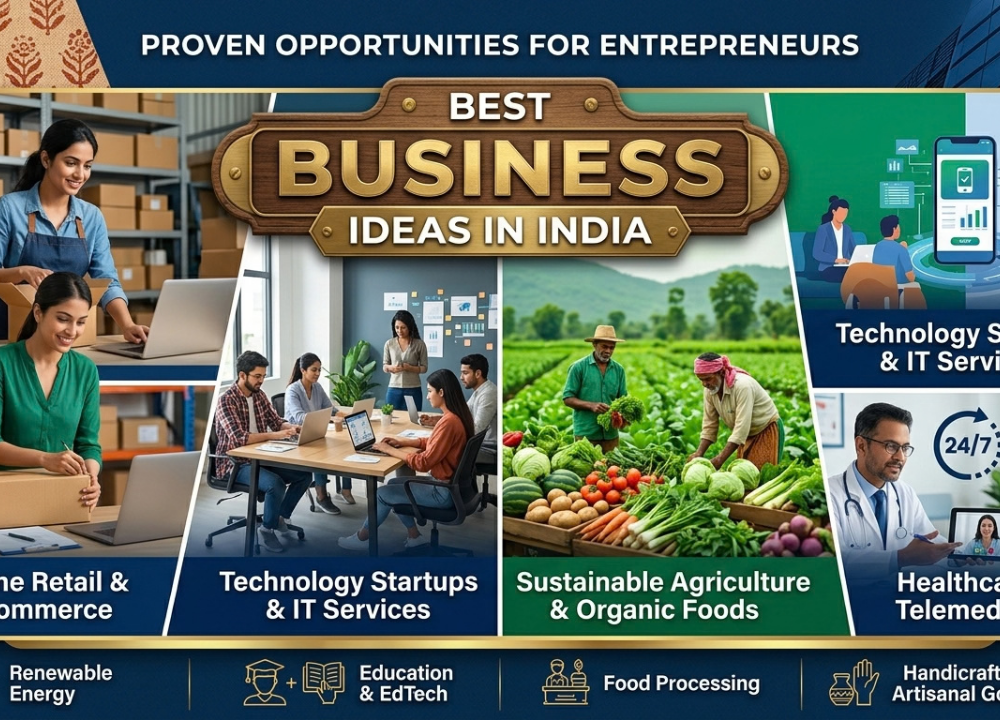
Starting a business does not always require a large office, expensive equipment, or substantial savings. Today, many entrepreneurs are choosing smaller business models that can be launched from home, online, or within a local community. With careful planning and a clear understanding of customer needs, a small venture can gradually develop into a sustainable business.
The best business ideas in india can vary significantly depending on a person’s skills, available capital, location, experience, and long-term goals. Some people may prefer service-based businesses because they require less inventory, while others may be interested in food, retail, education, technology, or creative services.
What Is a Low-Investment Business?
A low-investment business is a venture that can be started without committing a large amount of money upfront. These businesses often rely more heavily on skills, personal effort, digital tools, relationships, or existing resources than expensive physical infrastructure. For example, a freelance writer can begin with a computer and an internet connection, while a tutor can start by teaching students online or from home. Similarly, a social media manager can provide services to local businesses without renting an office.
Why Low-Investment Businesses Are Popular in India?
There are several reasons why small ventures attract new entrepreneurs.
- Lower initial financial commitment
- Ability to start from home
- Flexible working arrangements
- Opportunities to serve local and online customers
- Easier testing of a business concept
- Potential to expand gradually
- Increasing use of digital platforms
How to Choose the Best Business Idea in India
Choosing a business should involve more than looking at lists on the internet. The most suitable opportunity is usually one that fits your personal circumstances and solves a real market need.
Consider Your Budget
Start by calculating how much money you can realistically invest without putting essential finances at risk. Separate one-time expenses from recurring costs. For example, equipment may be a one-time expense, while advertising, software subscriptions, transportation, packaging, and utilities may continue every month.
Match the Business With Your Skills
Your existing abilities can reduce the time and money required to get started. Someone with strong writing skills may consider content services, while someone experienced in teaching may explore tutoring. Business skills can also be learned, but choosing an area that already matches your strengths can make the early stages easier.
Research Customer Demand
Talk to potential buyers, study competitors, examine reviews, and look for gaps in existing products or services. This research can help turn a general idea into a more specific business proposition.
Best Business Ideas in India With Low Investment
There are many opportunities for entrepreneurs who want to begin with limited capital. The following options cover different skills, industries, and working styles.
1. Freelance Writing and Content Services
Freelance writing can be started with relatively few physical resources. Businesses need blog posts, website content, product descriptions, newsletters, social media copy, and other written materials. A beginner can start by developing several writing samples and approaching small businesses, agencies, publishers, or online clients.
2. Digital Marketing Services
A digital marketing service can include social media management, search engine optimization, content planning, email marketing, or online advertising support. The best business ideas in india often combine an existing skill with a clear customer problem. Digital marketing is an example because businesses can outsource specific marketing tasks instead of hiring a full-time employee.
3. Online Tutoring
Education remains an area where individuals with strong subject knowledge can create service-based businesses. Tutors can teach school subjects, languages, computer skills, music, professional skills, or examination preparation, depending on their qualifications and experience.
4. Home-Based Food Business
People with cooking or baking skills can consider a home-based food business. Possible products include baked goods, snacks, specialty meals, desserts, or regional foods. Success depends heavily on consistency, food quality, hygiene, packaging, pricing, and customer service.
5. Tiffin or Meal Delivery Service
A tiffin service can focus on students, office workers, families, or other customers looking for convenient meals. A subscription model can create predictable ordering patterns, while a focused menu can simplify purchasing and preparation. Delivery costs should be carefully calculated because transportation can have a significant effect on margins.
6. Reselling Business
Reselling involves purchasing products and selling them to customers at a suitable margin. Products can include clothing, accessories, household goods, beauty products, stationery, or niche items. A beginner should research suppliers, product quality, customer demand, shipping expenses, returns, and marketplace fees before purchasing large quantities.
7. Home Cleaning Services
Cleaning services can be started locally and expanded as the customer base grows. A business might specialize in residential cleaning, office cleaning, deep cleaning, move-in cleaning, or specific maintenance services.
8. Website Development Services
Small businesses increasingly need websites to present their services, products, contact information, and online resources. Someone with web development or web design skills can create websites for local businesses and then offer maintenance, updates, hosting support, or other related services.
9. Local Delivery and Support Services
Small shops and local businesses may require delivery or logistical support. An entrepreneur can develop a service around a specific neighborhood or customer segment instead of trying to compete with large logistics companies. Understanding transportation costs, delivery times, fuel expenses, and customer expectations is essential before setting prices.
Best Online Business Ideas for Beginners
The best business ideas in india for online entrepreneurs often involve skills rather than physical inventory.
Some possibilities include:
- Freelancing
- Online tutoring
- Virtual assistance
- Website development
- Graphic design
- Content writing
- Social media management
- Digital marketing
- Online consulting
- Digital products
Best Home-Based Business Opportunities
Home-based businesses can be attractive because they may reduce expenses associated with renting commercial premises.
Some options include:
- Home tutoring
- Freelance services
- Baking and specialty foods
- Handmade products
- Beauty services
- Online consulting
- Reselling
- Digital content creation.
Business Ideas Based on Investment Level
| Investment Level | Example Business Ideas | Key Requirement |
| Very Low | Freelancing, tutoring, writing | Skills and internet access |
| Low | Reselling, social media services, handmade products | Products or specialized skills |
| Moderate | Food services, photography, cleaning | Equipment and working capital |
| Higher | Retail outlet, specialized service center | Premises, staff, and larger capital |
How Much Money Do You Need to Start?
There is no universal amount required to launch a small business. A freelancer may need only basic technology and software, while a food or retail business may require equipment, supplies, packaging, and working capital. The best business ideas in india should therefore be evaluated according to total startup and operating costs rather than the initial purchase price alone.
Start With Essential Expenses
Separate necessary costs from optional expenses. A new entrepreneur may not need an expensive office, premium equipment, or elaborate branding at the beginning.
Keep Working Capital Available
Do not spend every available rupee before opening. Businesses often need money to cover expenses while customer revenue is still developing.
How to Start a Low-Investment Business in India
Step 1: Choose a Specific Business Model
Start by clearly defining what you plan to sell and who your target customers are. Instead of trying to serve everyone, focus on a specific product, service, or customer need. A well-defined business model makes it easier to plan your pricing, marketing, operations, and overall growth strategy.
Step 2: Identify Your Target Customer
Define your ideal customer based on factors such as location, age group, profession, needs, budget, or interests.
Step 3: Research Competitors
Study competing businesses and examine their pricing, products, customer reviews, marketing methods, and areas where customers appear dissatisfied.
Step 4: Create a Simple Business Plan
Your initial plan can include:
- Business concept
- Target customers
- Startup costs
- Pricing
- Marketing strategy
- Operating expenses
- Sales goals
- Growth plans
Step 5: Check Applicable Legal Requirements
Business registration, tax rules, licenses, permits, and industry-specific requirements can differ according to the type and location of a business.
Step 6: Launch on a Small Scale
Start with a manageable product range or limited service offering. This makes it easier to identify problems and make improvements.
Step 7: Promote the Business
Use appropriate channels such as social media, local networking, referrals, search marketing, community groups, or partnerships.
Step 8: Track Financial Performance
Keep accurate records of sales, expenses, cash flow, and profit. Good financial records help you understand whether the business is actually improving.
Common Mistakes to Avoid
Choosing an Idea Only Because It Is Popular
A popular business model may already have significant competition. Consider whether there is enough demand in your target market and whether you can offer something distinctive.
Underestimating Operating Costs
Packaging, transportation, software, advertising, maintenance, taxes, and other recurring expenses can affect profitability.
Ignoring Customer Feedback
Early customers provide useful information about pricing, quality, convenience, and service. Their feedback can help identify improvements.
Spending Too Much Before Testing
Large purchases should generally come after there is reasonable evidence that customers want the offering.
How to Grow a Low-Investment Business
The best business ideas in india can become more sustainable when entrepreneurs focus on repeat customers, efficient operations, and a clear market position.
Focus on a Specific Niche
Instead of trying to serve everyone, consider specializing in a particular customer group or problem.
Build Repeat Customers
Customer retention can reduce the constant need to find new buyers. Reliable service, quality, communication, and loyalty programs can support repeat business where appropriate.
Use Digital Marketing
A professional website, useful content, social media presence, search visibility, and online reviews can help customers discover a small business.
Final Thoughts
Starting with limited capital does not mean thinking small. A service that begins with one person can eventually become an agency, while a home-based product business can develop into a larger brand. The best business ideas in india are not necessarily the businesses with the lowest possible startup cost. They are opportunities that can connect a genuine customer need with your available skills, resources, and ability to execute.
FAQs
Q1: What are the best business ideas in India with low investment?
Ans: Some options include freelancing, online tutoring, social media management, content writing, reselling, handmade products, home-based food services, cleaning services, and website development. The right option depends on your skills, budget, location, and customer demand.
Q2: Which business can I start with a small budget in India?
Ans: Service-based businesses such as freelancing, tutoring, writing, graphic design, virtual assistance, and social media management can often be started with relatively limited physical infrastructure. Actual costs depend on the tools and services required.
Q3: What is a good business to start from home in India?
Ans: Home tutoring, freelance services, handmade products, baking, specialty food services, online consulting, reselling, and certain personal-care services can be suitable for home-based operations, subject to applicable requirements.
Q4: Which online business is suitable for beginners?
Ans: Beginners can explore freelancing, online tutoring, content writing, virtual assistance, social media management, graphic design, and digital products. Starting with one clearly defined service can make it easier to build experience.
Q5: How do I choose the right business idea?
Ans: Compare your skills, available budget, customer demand, competition, operating costs, and potential for growth. Speaking with potential customers before investing heavily can also help validate the idea.