
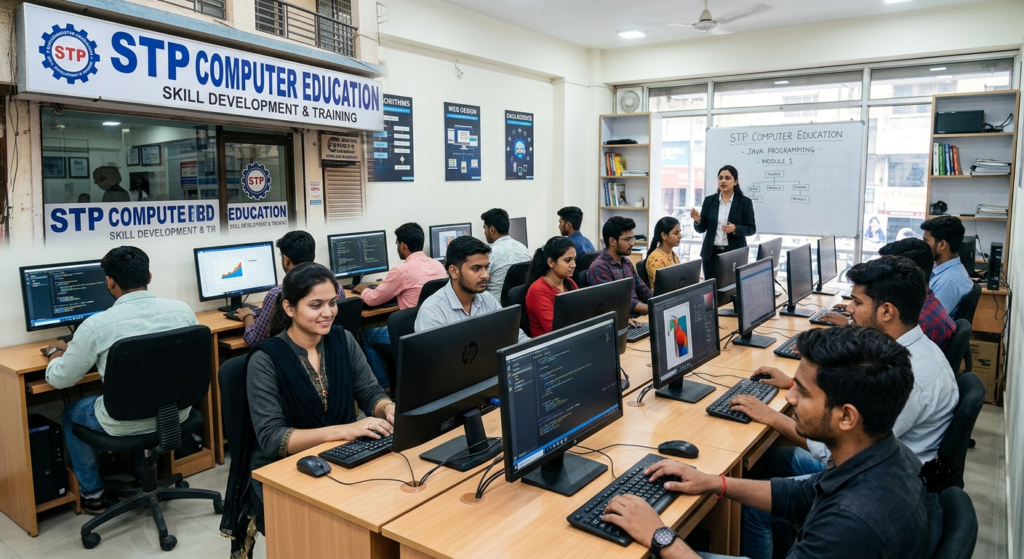
Computer skills have become an important part of education, employment, and everyday professional life. Digital technology is changing how people learn, communicate, organize information, and perform work. The International Labour Organization notes that digitalization is changing occupations and the skills required across different economic activities, making digital skills increasingly important for workers and learners.
For beginners, however, learning computer skills can sometimes feel difficult, especially when they do not know where to start. A structured learning platform can make the process easier by taking learners from basic concepts toward more specialized skills.
This is where Stp computer education can be relevant for learners looking for accessible computer training. It describes itself as a platform offering free computer courses in Hindi, with courses covering areas ranging from basic computer knowledge to office applications, programming, web development, design, and other career-focused skills.
What Is Stp Computer Education?
STP Computer Education is an online computer-learning platform that provides computer courses and learning resources. According to its current website, the platform focuses on making computer education accessible in Hindi and states that its courses are available free of cost.
Its current course listings include subjects such as basic computer skills, English typing, MS Office, Advance Excel, Tally, graphic design, web development, CSS, JavaScript, DCA, and ADCA. The exact course selection can change, so learners should check the current course catalog before choosing a program.
The platform also provides an Android application. Google Play describes the STP Computer Education app as offering free computer courses and video classes, with the listing also mentioning certificates upon course completion.
The Purpose of Computer Education
Computer education is not limited to learning how to switch on a computer or use a particular application. It can provide a foundation for using digital tools effectively in study, office work, communication, data handling, and specialized technical tasks.
STP Computer Education says its purpose is to make computer education accessible and to focus on practical, job-oriented skills. Its stated course categories include basic computer operations, office applications, programming and development, digital literacy, and career-focused training.
For a learner, the practical value comes from understanding how to apply what is learned rather than simply completing lessons.
Why Digital Skills Matter for Career Development
Technology continues to influence the workplace, and the skills people need can change as digital tools become more common. The ILO explains that digitalization is changing the nature of occupations and the skills required in different economic activities. It also emphasizes the importance of training and lifelong learning as technology changes.
That does not mean every learner needs to become a programmer. In many situations, a useful starting point is simply being comfortable with computers, documents, spreadsheets, online communication, files, and other everyday digital tasks.
Why Computer Education Is Important for Career Growth
The Growing Demand for Digital Skills
Digital technology is now closely connected with many areas of work. The ILO states that preparing for a digital future requires workers to develop essential digital and, increasingly, artificial-intelligence-related skills.
This makes basic digital literacy a useful foundation for people entering or adapting to the modern workforce. Stp computer education learning can begin with simple computer operations and gradually progress toward more specialized areas.
The goal should not be to learn every technology available. Instead, learners can identify the digital skills most relevant to their education, current work, or career interests.
Computer Skills in Modern Workplaces
Computers are used for many ordinary workplace activities, including creating documents, handling spreadsheets, managing files, communicating online, preparing presentations, and working with specialized software.
The OECD’s 2026 research on adult skills highlights how workplaces are being affected by digitalization and changing work organization. It also stresses the importance of understanding how skills are actually used on the job.
For this reason, practical computer knowledge can be more useful than memorizing definitions. A learner who understands how to complete realistic tasks can better connect training with everyday work.
How Digital Knowledge Can Improve Productivity
Computer knowledge can help people perform many routine tasks more efficiently. For example, understanding word-processing tools can make document creation easier, while spreadsheet skills can help users organize and work with information.
STP’s current course listings include MS Office and Advance Excel, while its broader course categories also include file management, document creation, presentations, and digital communication.
The benefit depends on how well a learner applies those skills. Training provides the knowledge, but regular practice is what turns that knowledge into usable ability.
The Value of Continuous Technology Learning
Learning does not necessarily end after completing one computer course. Technology changes, software receives updates, and workplace requirements evolve.
The ILO describes lifelong learning as important for employability and productivity during digital, technological, and other economic transitions.
Therefore, Stp computer education can be viewed as one possible starting point for building digital knowledge. Learners can begin with fundamentals and continue developing skills as their goals become clearer.
What Skills Can You Learn Through Stp Computer Education?
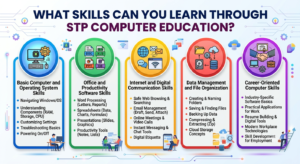
Basic Computer and Operating System Skills
Basic knowledge provides the foundation for everything that follows. STP’s stated basic computer category includes computer fundamentals and operations, operating-system navigation and management, file management, and system maintenance.
These skills can help beginners become more comfortable with everyday computer use. Understanding files, folders, basic settings, and common computer operations also makes it easier to approach more advanced subjects later.
Office and Productivity Software Skills
Office software is another important area of computer learning. STP lists Microsoft Office and Advanced Excel among its courses, while its About Us page identifies Word, Excel, PowerPoint, Google Workspace, document creation, and presentation skills within its office-application category.
These tools can be useful for academic assignments, administrative work, reports, presentations, and other everyday tasks. The most valuable part of learning them is understanding how to use the tools to solve practical problems.
Internet and Digital Communication Skills
Computer education can also include the responsible use of the internet and digital communication. STP’s stated digital-literacy category includes internet usage and safety, email management, communication, social media, and digital citizenship.
These skills are increasingly relevant because digital communication is now part of many educational and professional environments. Knowing how to communicate clearly online and use digital services responsibly is an important part of broader digital literacy.
Data Management and File Organization
Knowing how to organize information is a basic but valuable computer skill. Files that are properly named, stored, and organized are easier to locate and manage later.
STP specifically lists file management and system maintenance within its basic computer skills category.
Learners can use this foundation when working with documents, spreadsheets, images, project files, and other digital materials.
Career-Oriented Computer Skills
Once a learner understands the basics, they may want to explore a more specialized area. STP’s current course catalog includes subjects such as Tally Prime, graphic design, web development, JavaScript, CSS, Advance Excel, and other courses.
The right choice depends on the learner’s goals. Someone interested in accounting may look at accounting-related software, while someone interested in websites may prefer web-development topics. A learner should review the current syllabus and course requirements before enrolling.
Benefits of Stp Computer Education for Students and Professionals
Develop Practical Computer Knowledge
One potential advantage of structured computer learning is that it gives learners a path from basic concepts toward practical tasks.
STP states that its courses use step-by-step tutorials, practical exercises, and real-world examples.
For beginners, this approach can make technical topics easier to approach because learners can study concepts and then practice using them.
Build Confidence With Technology
Confidence usually develops through repeated practice. Someone who is unfamiliar with computers may initially find simple tasks confusing, but regular exposure can make those tasks more familiar.
STP describes its courses as being designed for learners, including beginners, and says its content is provided in Hindi.
Learning in a language the learner understands comfortably may make it easier to follow explanations and focus on the actual computer skill being taught.
Improve Workplace Productivity
Computer training can support productivity when learners apply their skills to real tasks. Word processing, spreadsheets, presentations, file organization, and email are examples of digital activities that can be useful in many settings.
STP’s course categories include these types of office and digital skills.
However, training alone does not guarantee better performance. The learner still needs to practice and understand how the tools fit into a particular workplace or role.
Develop Job-Ready Digital Skills
The ILO emphasizes that skills development should respond to changing labour-market needs and help people acquire relevant skills for an evolving workforce. STP similarly describes its curriculum as practical and job-oriented.
Together, these points highlight an important principle: computer education is most useful when learning is connected to real tasks and relevant career goals.
Support Long-Term Career Development
Career development is usually a continuing process rather than something achieved through one course. As technology changes, workers may need to update their skills or learn new tools.
The ILO’s work on lifelong learning emphasizes the importance of continuous skill development as workers adapt to changing technologies and labour markets.
A computer-learning platform can therefore be useful not only for beginners but also for people who want to expand their existing digital knowledge.
Who Can Benefit From Stp Computer Education?
Students and Recent Graduates
Students can use computer education to strengthen digital skills alongside their regular studies. Learning document creation, spreadsheets, presentations, internet skills, or other relevant subjects can complement academic work.
Recent graduates may also find computer training useful when they want to identify gaps in their practical digital knowledge.
Beginners Learning Computer Skills
Beginners are one of the clearest groups for basic computer education. STP offers a Basic Computer Course and describes its broader learning material as suitable for learners starting with computer fundamentals.
Starting with fundamentals can help prevent learners from becoming overwhelmed by advanced topics too early.
Job Seekers
Job seekers may use computer training to strengthen practical digital abilities relevant to the positions they are targeting.
However, completing a course should not be treated as a guarantee of employment. Job requirements differ between employers and roles, so learners should compare their training with the actual skills requested in job descriptions.
Working Professionals
Professionals may want to learn additional software or improve existing skills. For example, someone who already uses computers at work might choose to improve spreadsheet knowledge or learn another application relevant to their responsibilities.
The value of training is greatest when the subject matches an actual workplace need.
People Looking to Improve Their Digital Skills
Computer education is not limited to people actively searching for jobs. Anyone who wants to become more comfortable with digital tools can benefit from structured learning.
STP’s stated mission is to make computer education accessible and provide courses in Hindi, with its curriculum covering basic, office, programming, digital-literacy, and career-focused areas.
How Computer Skills Can Help You Prepare for a Career
Building a Strong Digital Foundation
Stp computer education and a strong foundation starts with basic computer knowledge. Before moving into advanced software or programming, learners can benefit from understanding operating systems, files, common applications, and internet use.
This foundation makes later learning easier because many advanced subjects build on basic computer familiarity.
Developing Practical Workplace Skills
Career preparation becomes more useful when learners practice tasks rather than only watching lessons.
For example, an office-focused learner can practice creating documents, preparing spreadsheets, and building presentations. A web-development learner can work through HTML, CSS, and JavaScript exercises. STP’s current catalog includes both office and web-development subjects.
Preparing for Technology-Driven Jobs
Digitalization is changing work across industries, according to the ILO. This means career preparation increasingly involves understanding how technology is used within a particular field.
The best approach is to combine computer knowledge with other abilities required by the target occupation, such as communication, problem-solving, subject knowledge, and professional experience.
Applying Computer Skills to Real-World Tasks
The strongest way to understand a computer skill is often to use it in a realistic situation.
A learner can create a sample report, organize a spreadsheet, build a small website, design a graphic, or complete another project related to the subject being studied. Practical projects can turn theoretical knowledge into something easier to demonstrate and remember.
How to Choose the Right Computer Education Program
Check the Course Curriculum
Before choosing a course, read the syllabus carefully. Make sure the topics match what you actually want to learn.
Stp computer education provides a course catalog containing different subjects, so learners can compare the available options with their own goals.
Look for Practical Learning
A good learning program should give students opportunities to apply concepts. STP says its courses include practical exercises and real-world examples.
Learners should still look at the individual course structure to understand how much practice is included.
Consider Course Duration and Schedule
Time commitment matters. A course should fit comfortably alongside school, work, or other responsibilities.
STP’s current catalog contains courses with different subject areas and formats, so learners should check the current course information before beginning.
Review Certification Details
Certificates can be useful as evidence that a learner completed training, but their value depends on the requirements of the employer, institution, or application.
STP states that it provides certificates and discusses ISO 9001:2015 certification on its website. Its certification information also notes that certificate acceptance for jobs depends on the terms and conditions of the specific job.
Therefore, learners should check the requirements of the specific organization rather than assuming that every certificate will be accepted everywhere.
Compare Fees and Learning Options
Cost is another factor to consider. STP currently advertises its courses as free of cost, which may make the platform accessible to learners who want to study without paying course fees.
Even when a course is free, learners should still consider the quality of the syllabus, practice opportunities, support, and relevance to their goals.
Consider Instructor Support and Learning Resources
Support can make online learning easier, especially when a learner gets stuck.
STP’s website describes instructor support and lists learning resources such as step-by-step tutorials, practical exercises, and real-world examples. The platform also describes technical support as part of its service.
Before starting, learners should check the current support arrangements because online platforms can update their services over time.
How to Get Better Results From Stp Computer Education And Training
Practice Skills Regularly
Watching a lesson is only the first step. Regular practice helps learners become familiar with commands, tools, shortcuts, and workflows.
Even a short practice session can be useful when it is consistent and focused on a specific skill.
Complete Practical Exercises
Practical exercises help learners discover where they need more practice. Instead of moving through lessons as quickly as possible, it can be more useful to stop and repeat tasks until the process becomes clear.
STP states that its courses include practical exercises and real-world examples, which can provide opportunities for this type of learning.
Work on Small Projects
Small projects can turn a lesson into a tangible result. For example, learners can create a simple spreadsheet, presentation, document, graphic, or basic website depending on the subject they are studying.
Projects also give learners a way to review several skills together rather than practicing each concept in isolation.
Keep Up With New Technology
Technology does not remain static. Software changes, new tools appear, and workplace practices evolve.
The ILO emphasizes the importance of lifelong learning and adapting skills to technological and labour-market changes.
Learners can therefore treat a computer course as part of an ongoing learning journey rather than the final step.
Apply What You Learn to Real Situations
The best way to judge whether a skill has been learned is to see whether you can use it without simply following a tutorial.
Try applying the skill to schoolwork, personal projects, practice assignments, or other appropriate tasks. This can reveal which areas are strong and which need additional practice.
Is Stp Computer Education Right for Your Career Goals?
Evaluate Your Current Computer Skills
Start by identifying what you already know. A beginner may need basic computer training, while someone with experience may benefit more from specialized subjects such as Excel, web development, design, or accounting software.
STP’s current catalog provides courses across several levels and subject areas.
Identify Your Career Objectives
Your career goal should influence what you learn. Someone interested in office administration may need different skills from someone interested in web development or graphic design.
Choosing a course based on a specific goal can make learning more focused and practical.
Choose Training That Matches Your Needs
There is no single computer course that is ideal for every learner. Consider your current level, preferred language, available time, and the type of skills you want to develop.
STP focuses its course content on Hindi-language computer education and offers different categories of learning.
Consider Your Long-Term Learning Goals
Think beyond the first course. If you start with basic computer skills, you might later progress to office applications, accounting software, design, programming, or another specialization.
A long-term learning plan can help you build skills progressively instead of choosing courses randomly.
Final Thoughts: Build Your Computer Skills for a Better Career
Computer skills are becoming increasingly important as technology continues to influence education, workplaces, and everyday activities. The most useful approach is not simply to collect certificates but to develop practical skills that can be applied to real tasks.
Stp computer education provides a range of computer-learning options, including basic computer education, office applications, typing, accounting-related software, graphic design, web development, and other subjects listed in its current catalog. Its website also states that the courses are free and delivered in Hindi.
For learners considering the platform, the best next step is to identify their current skill level and career goals, review the latest course details, and choose training that matches their needs. With regular practice and continued learning, computer education can become a useful part of a broader career-development plan.
FAQs About Stp Computer Education
What is Stp Computer Education?
It refers to the Computer Education platform, which provides online computer courses and learning resources. Its website states that the courses are offered free of cost and primarily delivered in Hindi.
Who can benefit from Stp Computer Education?
Students, beginners, job seekers, working professionals, and other learners who want to develop computer skills may find its courses useful. The platform lists courses ranging from basic computer education to office, design, programming, and other specialized subjects.
What computer skills should beginners learn?
Beginners can start with fundamental computer operations, operating-system navigation, file management, internet use, and common productivity applications. STP’s basic computer and digital-literacy categories cover several of these areas.
Why are Stp computer education skills important for a career?
Digitalization is changing workplaces and the skills required for different occupations. Developing relevant digital skills can therefore help learners prepare for technology-enabled work, although computer training alone does not guarantee employment.
Can computer education help improve job readiness?
Computer education can help learners develop practical digital abilities that may be relevant to particular jobs. The ILO emphasizes skills development that responds to changing labour-market needs, while STP describes its own curriculum as practical and job-oriented.