
Health and wellness have become important parts of everyday life. People are increasingly interested in learning about nutritious food, physical activity, quality sleep, stress management, and practical ways to maintain healthier routines. At the same time, the internet has made it easier to find information about these subjects.
Wellhealthorganic is part of this broader online health and wellness space. Websites using the WellHealth Organic name publish information and guides related to healthy living and wellness topics. However, online health information should always be evaluated carefully because general advice cannot account for every person’s individual health circumstances.
The World Health Organization (WHO) explains that self-care can include actions such as healthy eating, physical activity, adequate sleep, and maintaining social connections. It also emphasizes that self-care complements professional healthcare rather than replacing it.
What Is Wellhealthorganic?
It is best understood as a name associated with online health and wellness content. Related WellHealth Organic websites describe their purpose as sharing health information, tips, and guides connected with healthy living.
The topics associated with this type of content can include nutrition, fitness, lifestyle habits, self-care, and other wellness subjects. Readers can use such information to learn about general health topics, but individual medical decisions should not be based on an online blog alone.
The National Institute on Aging recommends checking the source of online health information, identifying who created it, looking for supporting evidence, and checking when the information was updated.
The Connection Between Natural Health and Wellness
Natural health and wellness are broad concepts. They can include everyday habits that support physical and mental well-being, such as eating a balanced diet, staying active, getting enough rest, and managing stress.
WHO’s guidance on self-care includes healthy eating, physical activity, adequate sleep, and social connection among practices that can support health and well-being.
However, the word “natural” should not automatically be interpreted as “safe” or “effective.” Natural products and remedies can still have risks, particularly when they interact with medicines or are used incorrectly. The National Center for Complementary and Integrative Health (NCCIH) advises people to consider evidence and safety when evaluating natural health products.
Why People Are Interested in Wellhealthorganic
People often turn to online health websites because they want accessible explanations of wellness topics. Instead of searching through technical medical material, readers may prefer straightforward articles about food, exercise, sleep, or everyday habits.
For anyone exploring Wellhealthorganic, a useful approach is to treat general posts as educational material and verify important claims using reliable sources such as WHO, government health agencies, medical organizations, and research institutions.
Why Natural Health and Wellness Matter
Healthy living is not based on one perfect habit. It is generally the result of several everyday choices working together.
WHO identifies healthy eating, physical activity, adequate sleep, avoiding tobacco, avoiding alcohol, and maintaining social connections as examples of lifestyle practices relevant to self-care and well-being.
The practical lesson is simple: people do not necessarily need complicated wellness routines. Sustainable habits that fit comfortably into everyday life can be a more realistic foundation.
Role of Balanced Nutrition
Nutrition is a central part of a healthy lifestyle. WHO describes a healthy diet through principles including adequacy, balance, moderation, and diversity. It recommends a varied diet that includes nutritious foods and limits excessive amounts of unhealthy fats, free sugars, and sodium.
There is no single diet that works exactly the same way for everyone. Dietary needs can vary according to age, activity level, culture, food availability, and individual circumstances.
A sensible approach is therefore to focus on overall dietary quality rather than searching for one “superfood” or eliminating large groups of foods without a good reason.
Importance of Regular Physical Activity
Physical activity is another important part of wellness. WHO states that regular physical activity provides physical and mental health benefits and can help prevent and manage several chronic conditions.
Activity does not necessarily mean formal gym workouts. Walking, cycling, sports, active recreation, transportation-related movement, and other activities can all contribute to physical activity.
WHO recommends that adults get at least 150 minutes of moderate-intensity physical activity per week, or an equivalent amount of vigorous activity, with additional muscle-strengthening activities on at least two days per week.
Key Areas of Natural Health and Wellness
Healthy eating is about the overall pattern of food choices. WHO emphasizes dietary diversity and recommends a foundation of nutritious foods, including vegetables, fruits, legumes, whole grains, nuts, and other appropriate sources of nutrients.
Wellhealthorganic instead of focusing on one ingredient or a restrictive rule, people can think about variety, balance, moderation, and nutritional adequacy.
People with allergies, medical conditions, or specific dietary requirements may need individualized nutritional guidance.
Exercise, Movement, and Fitness
Regular movement can support both physical and mental well-being. WHO defines physical activity broadly, including movement during transportation, work, household activities, sports, and leisure.
The important point is that movement does not have to look the same for everyone. A person’s age, abilities, fitness level, and health circumstances can influence the most appropriate activities.
For this reason, wellness advice should focus on appropriate and sustainable activity rather than unrealistic fitness expectations.
Sleep, Rest, and Stress Management
Sleep and recovery are important parts of a balanced lifestyle. WHO includes adequate sleep among healthy self-care practices.
Stress management also matters. WHO recommends healthy approaches such as staying connected with trusted people, maintaining regular physical activity, eating a balanced diet, and getting enough sleep.
A wellness routine should therefore leave room for rest and recovery instead of focusing only on productivity or physical activity.
Wellhealthorganic and Healthy Lifestyle Habits
A wellness routine becomes more useful when it is realistic. Trying to change everything at once can make a routine difficult to maintain.
Instead, people can introduce manageable changes gradually. For example, someone could begin by becoming more physically active, improving meal variety, or creating a more consistent bedtime routine.
The objective is not perfection. It is creating habits that can realistically become part of everyday life.
Making Better Everyday Food Choices
Better food choices do not require an extreme diet. WHO’s healthy-diet guidance emphasizes variety, balance, moderation, and adequate nutrition.
This means considering the overall quality of meals rather than judging individual foods in isolation. Cultural preferences, personal circumstances, activity levels, and health requirements can all influence dietary choices.
Creating a Balanced Wellness Routine
A balanced wellness routine can bring together several areas of healthy living: nutritious food, physical activity, adequate sleep, stress management, and social connection.
There is no universal schedule that everyone needs to follow. The best routine is one that fits realistically around personal responsibilities and can be maintained over time.
Benefits of a Balanced Wellness Lifestyle
Wellhealthorganic involves more than one aspect of health. Nutrition, movement, sleep, stress management, and social relationships can all contribute to a person’s overall well-being.
For example, WHO reports that physical activity can benefit physical and mental health and improve overall well-being.
Developing Healthier Daily Habits
Learning about wellness can help people become more aware of everyday choices. Rather than following every new health trend, readers can focus on established principles such as balanced nutrition, appropriate activity, sufficient rest, and reliable information. Small improvements can be more practical than dramatic lifestyle changes.
Improving Awareness of Personal Wellness
Health awareness also means understanding personal differences. Advice intended for the general population may not be appropriate for someone with a particular medical condition, allergy, medication, or dietary requirement.
Reliable health information can help people recognize when a question requires professional guidance rather than other online posts.
How to Start a Natural Wellness Routine
A simple starting point is to choose one or two realistic changes. Someone might begin by adding more movement to the day, improving the variety of meals, or establishing a regular sleep schedule.
Small steps can make a new routine easier to manage.
Stay Consistent With Healthy Habits
Consistency matters more than expecting instant transformation. Healthy living is an ongoing process.
WHO emphasizes that some physical activity is better than none, which supports a gradual approach to becoming more active. The same practical mindset can be applied to other lifestyle habits.
Adjust Your Routine to Your Individual Needs
Individual circumstances matter. Age, health conditions, medications, allergies, activity levels, and nutritional needs can affect what is appropriate.
Anyone considering major dietary, exercise, or supplement changes should seek suitable professional advice when necessary.
How to Evaluate Natural Health Information
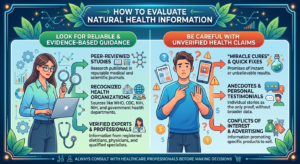
Before trusting a health claim, check who published it and why. Look for information about the author, publication date, references, and organization behind the website.
The National Institute on Aging recommends examining the source, purpose, authorship, supporting evidence, and update date of online health information.
Look for Reliable and Evidence-Based Guidance
Reliable health information should have appropriate evidence behind it. Government health agencies, universities, hospitals, medical organizations, and established research institutions can be useful sources for checking important claims.
NCCIH recommends considering where online health information comes from, whether experts reviewed it, how the information is supported, and whether it is current.
Be Careful With Unverified Health Claims
A health claim should not be accepted simply because it sounds natural or appears frequently online.
Readers should be particularly cautious about claims promising guaranteed cures, instant results, or dramatic health improvements from one ingredient, product, supplement, or routine.
Common Mistakes in Natural Wellness Wellhealthorganic
Health trends can become popular very quickly, but popularity is not proof of effectiveness. Before adopting a new practice, readers should investigate where the claim originated and whether reliable evidence supports it.
Expecting Immediate Results
Healthy habits generally require consistency. Expecting an overnight transformation can create unrealistic expectations. A more practical approach is to focus on sustainable changes and evaluate progress over time.
Ignoring Individual Health Needs
General health information cannot account for every individual. Someone with a medical condition or specific health requirement may need personalized guidance.
Online wellness content can provide general education, but it should not replace professional healthcare when personal medical advice is necessary.
Read more: Comcast Business at Home Internet: Complete Guide to Plans & Benefits
Wellhealthorganic and the Future of Wellness
Interest in natural wellness continues to overlap with broader public-health topics such as nutrition, physical activity, sleep, stress management, and self-care.
Wellhealth organic fits into this wider digital wellness environment by providing health-related information for readers interested in healthy living.
The Role of Digital Health Information
Digital health information is convenient, but accessibility does not guarantee accuracy. Readers have to distinguish between evidence-based information and unsupported claims. Checking reliable sources before acting on important health advice is therefore becoming an essential digital skill.
Importance of Sustainable Healthy Living
The future of wellness does not have to depend on complicated trends. Fundamental habits such as nutritious eating, regular movement, adequate rest, stress management, and informed decision-making remain important.
For readers interested in Wellhealthorganic, combining online wellness information with reliable health authorities can provide a more responsible way to learn about healthy living.
Final Thoughts on Wellhealthorganic
Wellhealth organic belongs to the growing online health and wellness space, where readers can find information about nutrition, fitness, healthy living, self-care, and related lifestyle topics.
The most responsible approach to natural health is not to search for a single miracle solution. Healthy living is better viewed as a combination of sustainable habits, including balanced nutrition, regular physical activity, adequate rest, stress management, and informed decision-making.
Reliable information is just as important as healthy habits. Readers should check sources, consider the evidence behind health claims, and recognize when professional medical or nutritional advice is appropriate.
FAQs About Wellhealthorganic
What Is Wellhealthorganic?
Wellhealth organic provides online health and wellness information. It covers topics related to healthy living and wellness.
Is Wellhealthorganic Suitable for Beginners?
Yes, its content can help beginners learn about wellness. Important health claims should still be verified.
How Can Someone Start a Natural Wellness Lifestyle?
Start with balanced nutrition, exercise, sleep, and stress management. Choose habits that fit your individual needs.
Why Is Reliable Health Information Important?
Reliable information helps readers avoid misleading health claims. Always check trusted health sources when needed.
Is Natural Health the Same for Everyone?
No, wellness needs can differ from person to person. Individual health conditions may require professional guidance.